
When I was a kid, I negotiated a later bedtime so I could stay up and read. When I was an adult, my eyesight deteriorated due to a heredity condition and I could no longer read print books, day or night. Although I had access to audio books, I felt that my identity as a reader had been at best realigned, at worst dismissed. The last thing I wanted to read about was vision loss and disability. I didn’t have the word for it at the time, but what I feared was “inspiration porn” – stories of disabled people “overcoming obstacles,” “not letting their disability stop them,” and “achieving their dreams no matter what.” I knew it wasn’t as easy as those narratives made it seem, and I had no patience for rhetoric that was just going to make me feel worse about my inept adjustment to disability.
But I’m also a researcher, so when I started using a cane and could no longer hide my disability, I needed to try to understand the tension I felt between the disabled and non disabled worlds. The book gods were kind – the first book I read was “Disability as a Social Construct: Legislative Roots” by Claire H. Liachowitz. I was convinced within the first ten minutes (I think of books in time, not pages), and I wanted to talk about these ideas. I started a disability reading group; we’ve been meeting monthly for four years, and the books below are a few of my favorites from the dozens we’ve read. These are all nonacademic and written to a general audience, and there are more, but this should get you started…
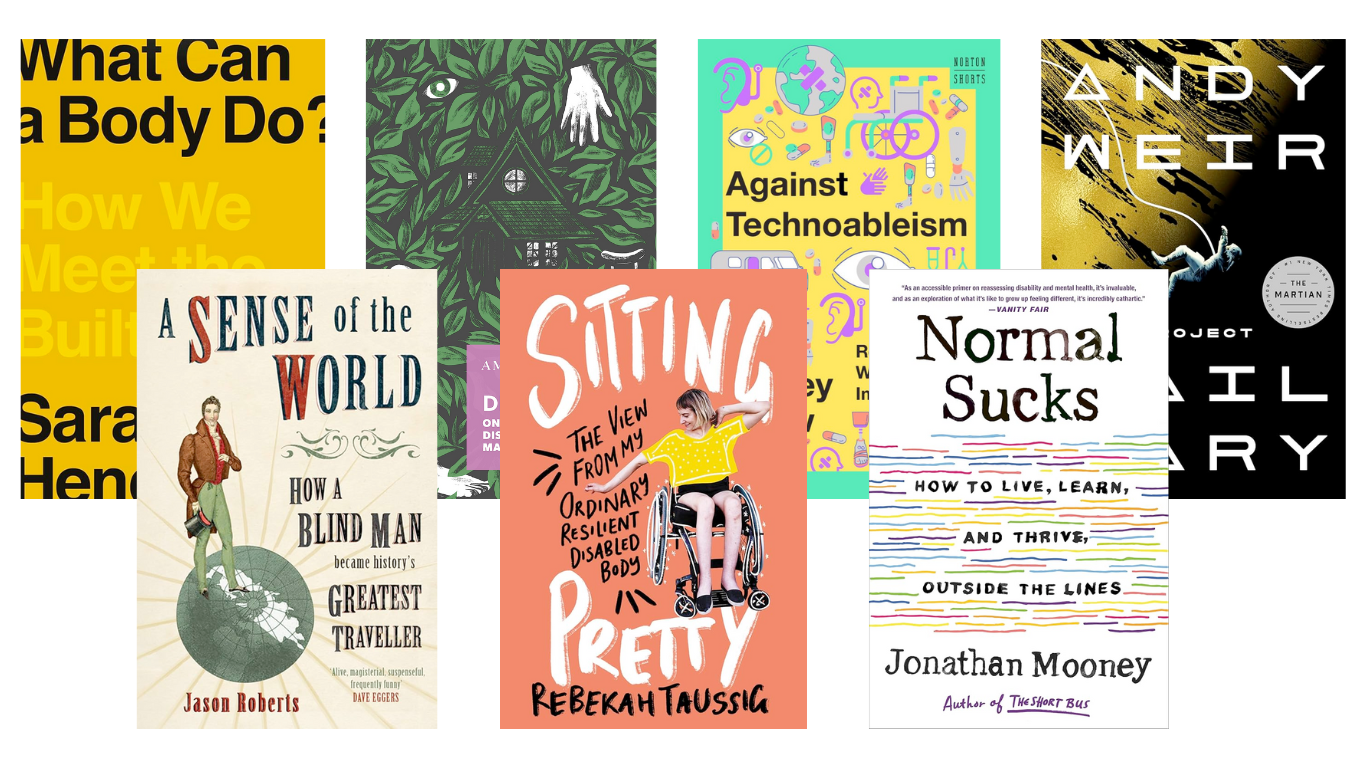
What Can a Body Do?: How We Meet the Built World by Sara Hendren & Against Technoableism: Rethinking Who Needs Improvement by Ashley Shew
These two books complement each other quite well. They address similar questions about the ways our bodies and senses encounter and interact with the world. Hendren’s description of Deaf architecture is particularly intriguing (especially if you’re a design nerd). Shew reminds us that technology can’t “fix” everything and points out that not everything (or everyone) is broken in the first place. She also has an aversion to “inspiring” disability stories, and her snarky take-down of such narratives is likely to induce laughter and cringing. Both authors provide valuable introductions to models of disability theory that provide context for their arguments, questions, and reflections.
Disfigured: On Fairy Tales, Disability, and Making Space by Amanda Leduc
Part memoir, part cultural analysis, Leduc examines long-standing tropes that have shaped the stories we tell and how those stories affect the way we understand the disability. From wrinkled witches to buff superheroes, Leduc invites us to re-think representation.
Normal Sucks: How to Live, Learn, and Thrive Outside the Lines by Jonathan Mooney
Don’t be put off by the “how to” in the subtitle. Mooney doesn’t offer advice, but he provides a humorous and honest story of his experience in the US education system as a student with learning differences. One of the most useful parts of the book is Mooney’s potted history of the term and concept of “normal,” how it came to be applied to humans, its links to eugenics, and how it continues to be a damaging standard for everyone.
A Sense of the World: How a Blind Man Became History’s Greatest Traveler by Jason
Roberts
A fascinating history of disability in the early nineteenth century. Roberts relates the experiences of James Holman, a Naval officer who inexplicably loses his sight, fights for a pension, and continues to travel the world. The book is meticulously researched and contains Holman’s own words in the form of poems and journal entries.
Sitting Pretty: The View from My Ordinary, Resilient, Disabled Body by Rebekah Taussig
Although largely a memoir with plentiful details about Taussig’s individual experience, her book also considers many of the broader disability-related issues society continues to face (or ignore). With an advanced degree in disability studies and creative nonfiction, she crafts an engaging presentation of her life and disability’s role in it.
Project Hail Mary by Andy Weir
While this isn’t specifically a book about disability, one of the main characters is blind and there are a lot of adaptive techniques, trial and error, and collaboration – all familiar activities to people with disabilities. The overall message is optimistic, yet not cloying. Also, for the character who is blind, blindness is neither a disability nor an impairment, which is an intriguing perspective indeed.
I do confess that I found these books inspiring, but not in a passively complacent way; rather, I’m inspired to think critically about disability and the world we live in, to question what we really mean when we talk about accessibility and inclusion, and to advocate for equity and opportunity. My battle for a later bedtime has been decided by my work schedule, but I will always find time to read books that might help change the world.
Written by Tabitha Kenlon
Leave a Reply